
Determine the Right Term
Choosing the right mortgage term depends on your rate, payment comfort, risk tolerance, future plans and penalties. Learn how mortgage terms work in Quebec.
How to Choose the Right Mortgage Term in Quebec
Choosing the right mortgage term is not only about finding the lowest rate. Your term can affect your payment stability, flexibility, penalties, renewal options, and long-term mortgage cost.
Why Your Mortgage Term Matters
Your mortgage term is the length of time your mortgage agreement is in effect. During that period, your rate, payment structure, and mortgage conditions are usually set based on the product you choose.
The right mortgage term in Quebec depends on your comfort with payment changes, your future plans, your risk tolerance, and whether flexibility or stability matters most to you.

What Is a Mortgage Term?
A mortgage term is the period of time your mortgage contract is in place. Common mortgage terms in Canada may range from one year to ten years, with five-year terms being common for many borrowers.
At the end of the term, your mortgage usually comes up for renewal. This is when you can review your rate, lender, payment structure, amortization, and overall mortgage strategy.
Mortgage Term vs. Amortization
Mortgage term and amortization are often confused, but they are not the same thing.
| Mortgage Term | Amortization |
|---|---|
| Length of your mortgage contract. | Total time planned to pay off the mortgage. |
| Often 1, 2, 3, 4, 5, 7, or 10 years. | Often 25 or 30 years, depending on qualification and product. |
| You renew when the term ends. | Affects how quickly the mortgage is paid off and total interest paid. |
Fixed vs Variable Mortgage Terms
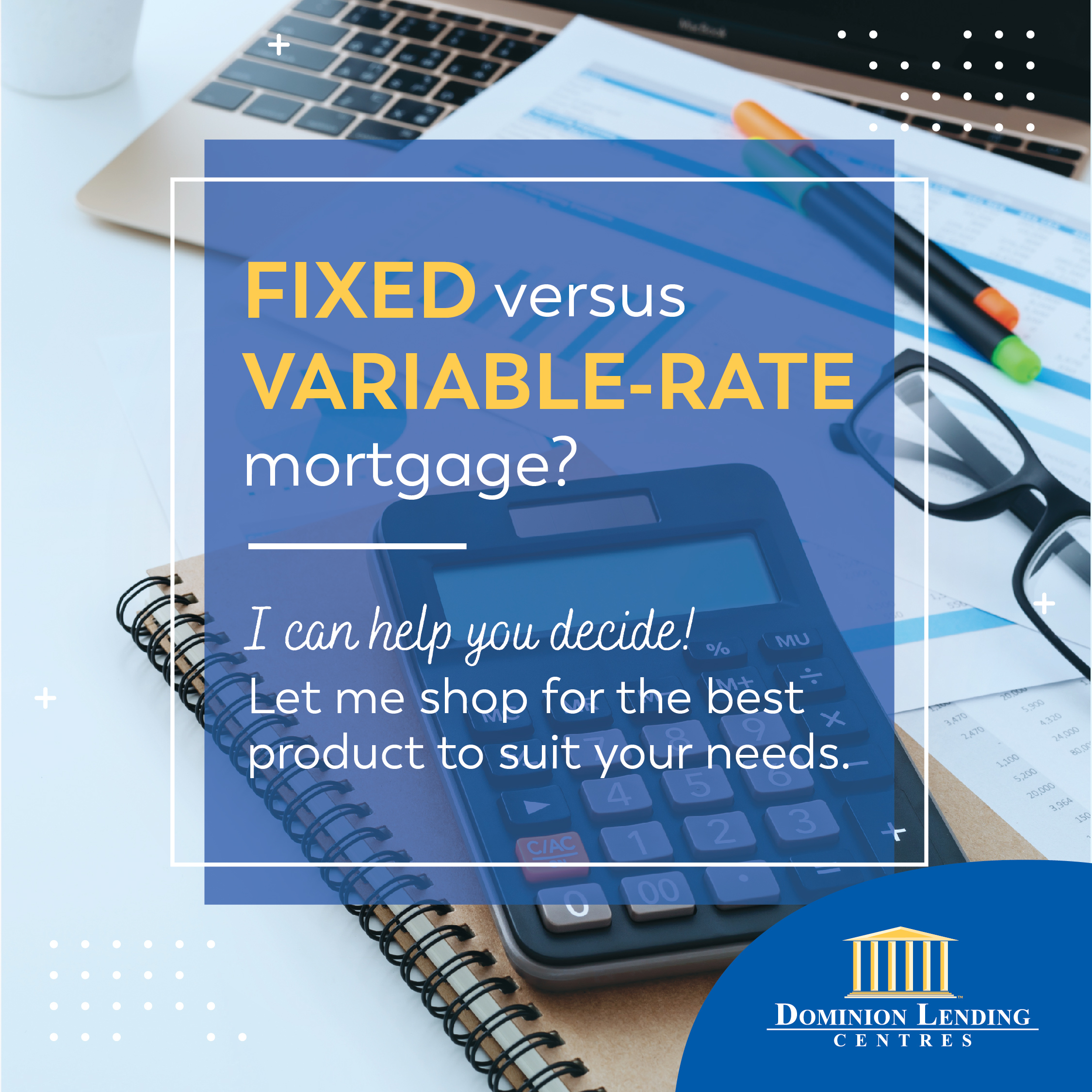
A fixed-rate mortgage provides payment stability during the term because the interest rate remains the same. This can be helpful if you want predictable payments and protection from rate increases.
A variable-rate mortgage is connected to the lender’s prime rate. Your interest cost may change if prime rates increase or decrease. Some borrowers choose variable rates for flexibility, while others prefer fixed rates for stability.
Learn more about fixed vs variable mortgage options.
Short-Term vs Long-Term Mortgage Terms
A shorter mortgage term may provide more flexibility if you expect rates to change, plan to move, or want to review your mortgage sooner. However, it also means you may face renewal sooner.
A longer mortgage term may provide more payment stability and reduce uncertainty during the term. This can be useful if your budget is tight, you want predictable payments, or you are concerned about rate increases.
Why Mortgage Penalties Matter
The lowest rate is not always the best mortgage if the product has restrictive terms or expensive penalties. If you break your mortgage before the end of the term, penalties may apply.
Variable-rate mortgages often use a three-month interest penalty, while fixed-rate mortgages may use an Interest Rate Differential calculation. The exact penalty depends on the lender, product, remaining term, and rate environment.
This is why it is important to compare the full mortgage product, not only the interest rate.
Not Sure Which Mortgage Term Fits Your Situation?
A mortgage review can help you compare fixed, variable, short-term, and long-term options before choosing a mortgage product.
How to Choose the Right Mortgage Term in Quebec
There is no single mortgage term that is right for everyone. The best option depends on your financial situation, comfort level, and future plans.
- Your budget: Do you need predictable payments?
- Your risk tolerance: Are you comfortable with possible rate changes?
- Your future plans: Do you expect to sell, refinance, or move before the term ends?
- Your income stability: Is your income fixed, variable, seasonal, or self-employed?
- Your debt strategy: Do you plan to consolidate debt or pay down your mortgage faster?
- Your penalty risk: How likely are you to break the mortgage before maturity?
How Amortization Affects Your Mortgage Payment
Your amortization affects how long it will take to pay off your mortgage and how much interest you may pay over time. A shorter amortization usually means higher payments but less interest over the life of the mortgage. A longer amortization usually means lower payments but more interest over time.
For first-time buyers or borrowers with tighter budgets, a longer amortization may help improve monthly cash flow. For borrowers focused on becoming mortgage-free faster, a shorter amortization may be worth reviewing.
You can also use the mortgage calculator to estimate how different payments may affect your budget.
Mortgage Term and Renewal Planning
When your mortgage term ends, your mortgage comes up for renewal. This is an opportunity to review your rate, lender, payment frequency, amortization, prepayment privileges, and overall mortgage strategy.
Renewal is also a good time to compare lenders instead of automatically accepting the first offer from your current lender.
Learn more about mortgage renewal in Quebec.
Should You Choose the Lowest Mortgage Rate?
A low rate is important, but it should not be the only factor. The mortgage term, penalty calculation, prepayment options, portability, refinance flexibility, and lender conditions can all affect the real cost of the mortgage.
A mortgage that looks cheaper at the beginning may become more expensive if you need to break the term later and face a large penalty.
You can review current mortgage rates to understand how rate options compare.
Frequently Asked Questions About Mortgage Terms
What is a mortgage term?
A mortgage term is the length of time your mortgage agreement is in place. At the end of the term, your mortgage usually comes up for renewal.
What is the most common mortgage term in Canada?
Many borrowers choose a five-year mortgage term, but the right option depends on your financial goals, risk tolerance, and future plans.
Is a longer mortgage term better?
A longer term can provide payment stability and reduce renewal risk, but it may also offer less flexibility if your plans change before the term ends.
Is a shorter mortgage term better?
A shorter term may provide more flexibility and a faster opportunity to renew, but it can also expose you to rate changes sooner.
What happens when my mortgage term ends?
When your term ends, your mortgage renews. You can review options with your current lender, compare other lenders, adjust your amortization, or change your mortgage strategy.
Can I break my mortgage term early?
Yes, but penalties may apply. The penalty depends on the mortgage type, lender, remaining term, and rate environment.
Related Mortgage Resources
Why Work With Me?
I help clients across Quebec compare mortgage terms, rates, penalties, and lender options so they can choose a mortgage that fits their financial situation.
Whether you are buying your first home, renewing your mortgage, refinancing, or comparing fixed and variable options, my goal is to help you make an informed decision.
Need Help Choosing the Right Mortgage Term?
A mortgage review can help you compare term length, fixed and variable options, penalties, and payment comfort before choosing a mortgage.